
 Campaign strategy
How to create competition when there is no auction date
Three in five auction campaigns are now converting to private treaty. The deadline that used to do the work has gone, and the structure has to come from somewhere else.
Sources: Domain, via Real Estate Business, September 2026.
For years, the auction date did a lot of the heavy lifting.
It gave buyers a deadline. It created urgency. It brought interested parties together at the same point in time and gave sellers a clear campaign structure from day one.
But that structure is becoming less reliable.
Three in five properties that start out as auction campaigns are now switching to private treaty, the highest rate since the 2022–2023 downturn. In Brisbane, that conversion rate has reached 67.6%. At the same time, properties are taking longer to sell, with Brisbane's median days on market increasing from 19 to 28 days year on year.
That doesn't mean buyers have disappeared. It means they have more time and more choice.
Instead of being pushed towards one auction date, buyers can compare properties, reconsider price, ask more questions and wait. For agents, that creates a different challenge: how do you create genuine competition when there is no auction date doing it for you?
The answer isn't to manufacture urgency or tell every buyer there is "other interest". Buyers are increasingly sceptical of those tactics. The stronger approach is to run a private treaty campaign with the same discipline an auction campaign naturally creates: a clear timeline, early buyer identification, transparent competition and consistent follow-up.
In a market where buyers are deliberating rather than rushing, the agents who can create that structure have an advantage.
Here's what that can look like in practice.
What the auction was actually doing
An auction wasn't just a way to sell a property. It gave the entire campaign a clock.
From the moment a property launched, buyers knew exactly when they had to make a decision. Inspections, follow-ups and negotiations were all working towards the same date. Even buyers who were still weighing up their options knew they couldn't wait forever.
That deadline helped create competition naturally. When several interested buyers were pushed towards making a decision at the same time, momentum could build quickly.
Auctions tend to perform best when multiple buyers are competing for the same property. As buyers gain more choice, creating that same auction-day momentum becomes harder.
Nicola Powell, Chief Economist, DomainPrivate treaty removes that built-in deadline.
A buyer can inspect on Saturday, think about it for a few days, look at another property the following weekend and come back later. Another interested buyer might be doing exactly the same thing, but neither necessarily feels pressure to act.
That means agents need to replace the structure the auction date once provided.
Rather than relying on a single deadline to bring buyers together, the campaign needs clear timeframes, stronger follow-up and a better understanding of who is genuinely interested. The goal isn't to recreate an auction inside a private treaty campaign. It's to make sure interested buyers aren't moving through the campaign completely independently of one another.
When the auction clock disappears, creating momentum becomes a much more deliberate part of the agent's job.
Set the campaign length before launch
Without an auction date, a private treaty campaign can easily become open-ended.
The property launches, inspections begin and everyone waits to see what happens. If strong offers don't arrive straight away, another week passes, then another. Eventually, the agent and vendor are having a difficult conversation about price or strategy without ever agreeing on when that conversation would happen.
That matters even more when properties are taking longer to sell. In Brisbane, median days on market have increased from 19 to 28 days year on year. A longer campaign isn't necessarily a failed campaign, but it does make having a clear plan from the beginning more important.
Before the property goes live, agents can agree with the vendor on a campaign timeframe and specific points to review its performance.
That could mean looking at enquiry levels, inspection numbers, buyer feedback and whether inspections are actually turning into offers. If the same feedback keeps coming up, or enquiry is quieter than expected, that information can help guide what happens next.
Kath Sweeney makes a similar point: once a property is live, the campaign needs to be watched closely and adjusted when the market starts giving you information. Recent comparable sales also matter here. What sold six or twelve months ago may provide context, but what has sold, gone under contract or remained on the market in the last few weeks can give a much clearer picture of where buyers are sitting today.
The important part is that the review isn't a surprise.
By setting expectations early, the review point becomes a planned part of the campaign rather than a difficult conversation that comes out of nowhere. When that point arrives, the agent can use buyer feedback, enquiry levels and recent market activity to explain what is working, what isn't and whether the strategy needs to change.
A clear campaign timeline doesn't recreate the auction date, but it does replace some of the structure that disappeared with it.
Week one belongs to buyers you already know
A new listing doesn't always need a completely new pool of buyers.
Before the campaign even begins generating fresh enquiry, there may already be people in your database who have shown interest in similar properties. They might have enquired on a comparable listing, attended an inspection or come close to purchasing something nearby.
Those buyers can give an agent a valuable head start.
Instead of waiting for the first open home to find out who might be interested, agents can look back at previous enquiry and identify buyers whose behaviour suggests the new listing could be relevant to them.
The important part is knowing more than just who is sitting in the database. An old enquiry on its own doesn't tell you much. What matters is the context around it: what property they were interested in, what they inspected and whether their behaviour suggests they may still be looking.
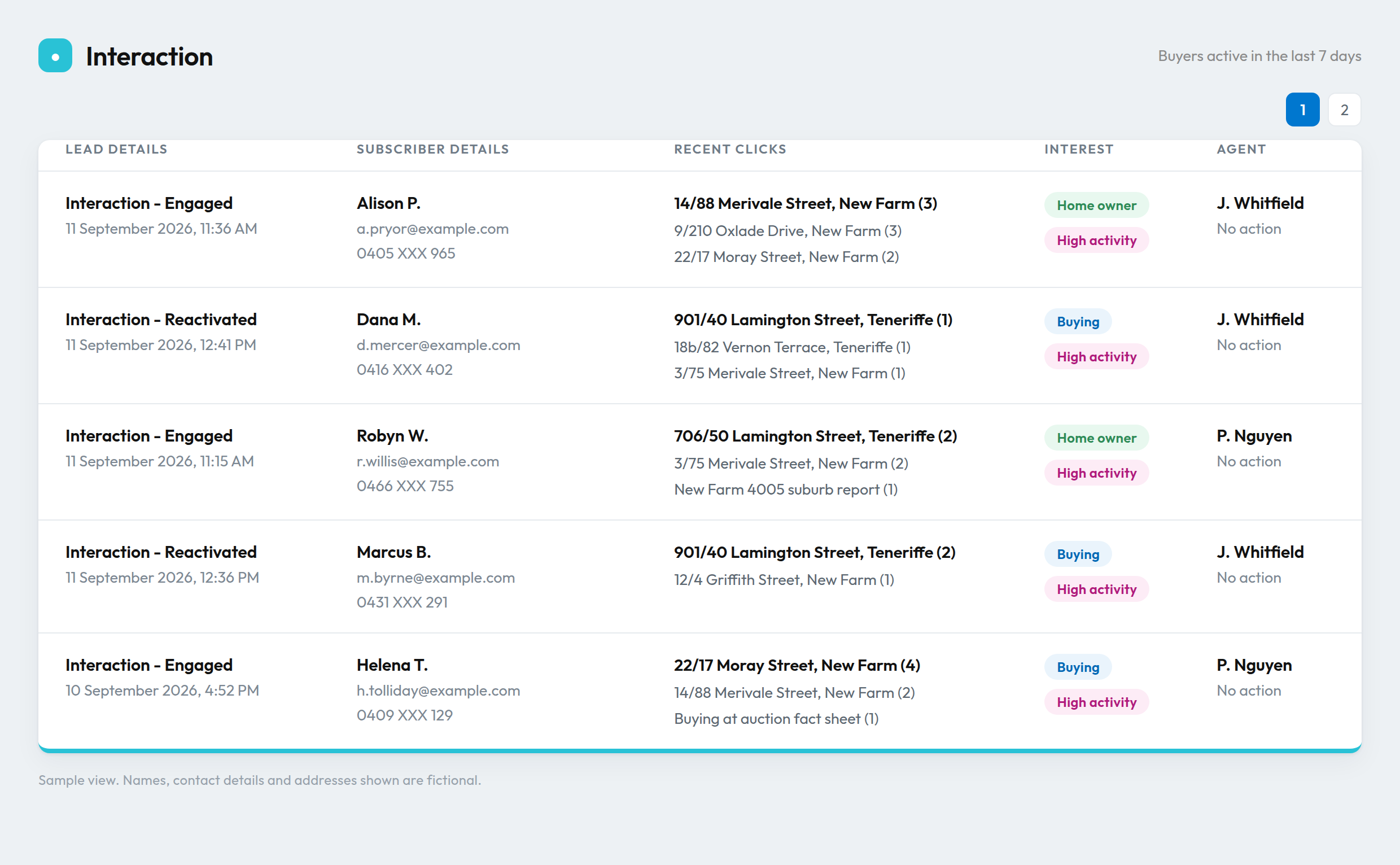
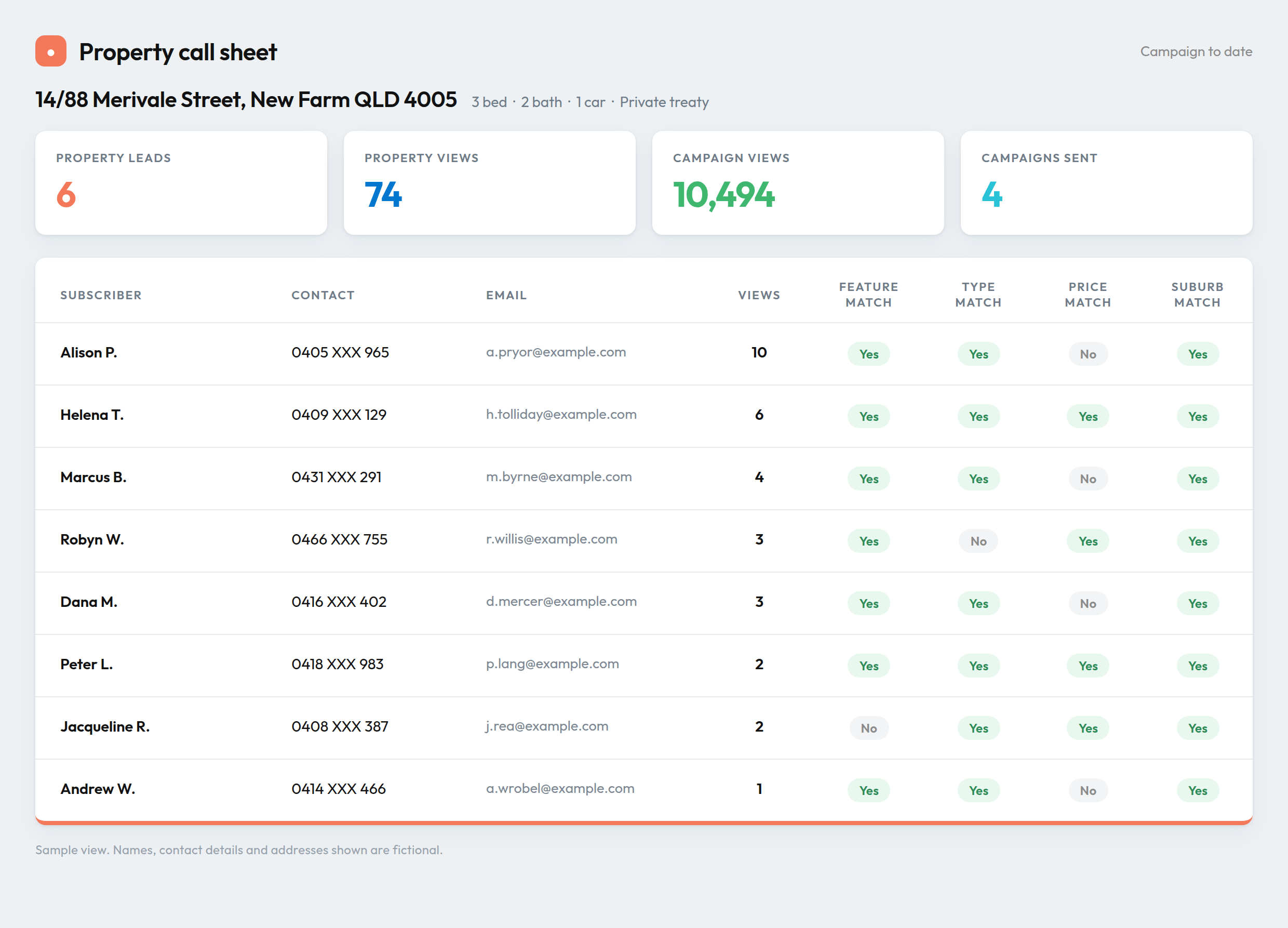
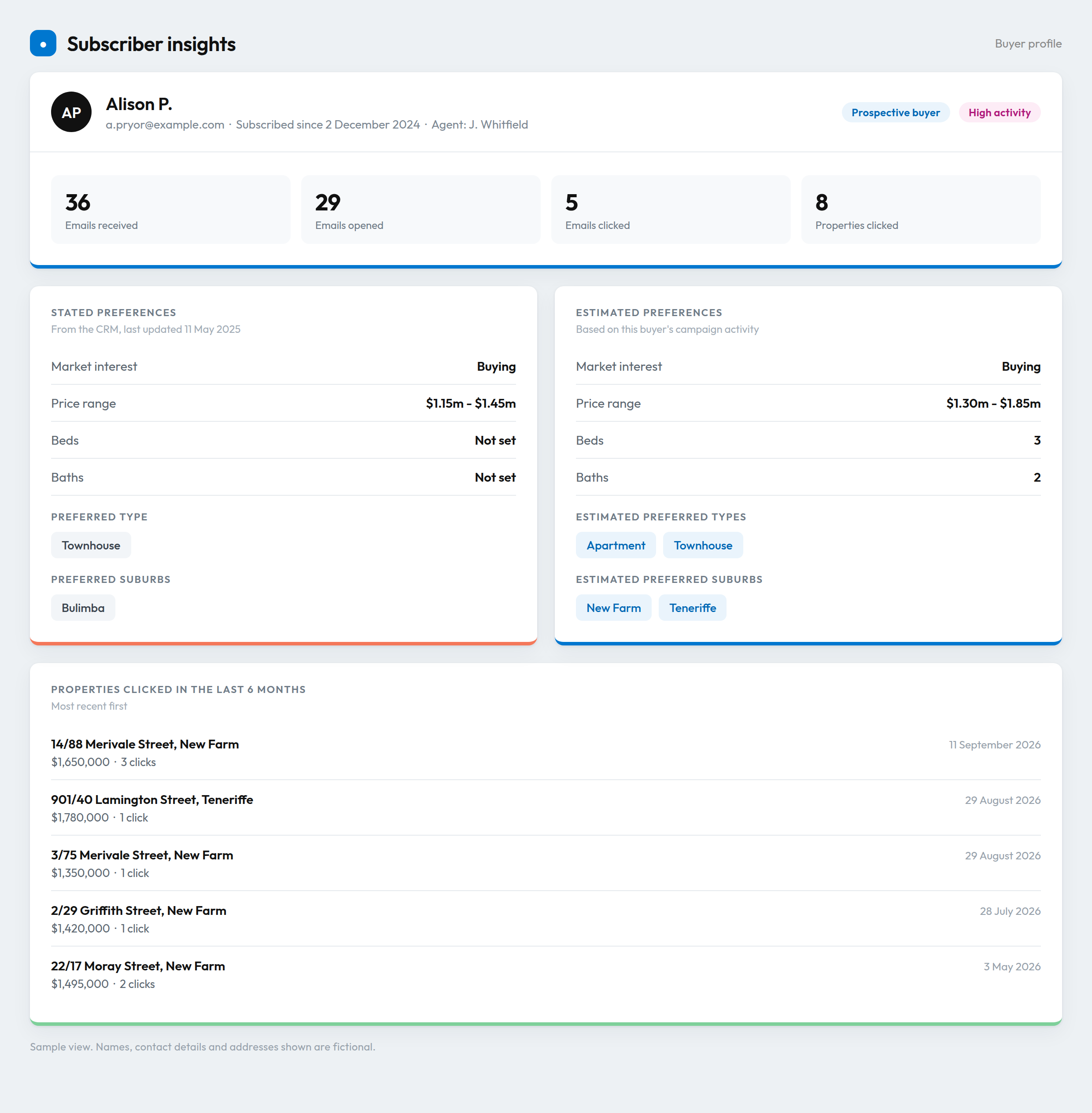
This is where iRealty can help. Rather than treating your database as a static list of contacts, iRealty helps agents make better use of the buyer enquiry and engagement already sitting within it. Behaviour signals can help highlight contacts showing interest, giving agents a clearer idea of who may be worth reaching out to when a relevant property comes to market.
That means agents can spend less time working through their database blindly and focus their attention on buyers whose behaviour suggests there may be a genuine opportunity. When a new listing matches what those buyers have previously shown interest in, the agent has a reason to start the conversation early.
And in a private treaty campaign, speed matters. Reaching relevant buyers early can help generate stronger initial interest and give agents a clearer picture of demand before weeks of the campaign have passed.
Week one, then, isn't just about waiting to see who finds the listing. It's also about looking at who you already know.
Build competition buyers actually believe
Creating urgency in a private treaty campaign doesn't mean making buyers feel pressured.
Buyers are increasingly aware of the tactics that can be used to encourage a faster decision. Claims of "other interest" or suggestions that another offer could arrive at any moment can quickly lose their impact if buyers don't believe there is anything behind them.
The better approach is to let the campaign create its own sense of competition.
Inspection timing can play an important role. Bringing interested buyers through within a similar timeframe gives them a genuine sense that other people are considering the property too. When there are multiple offers, being clear about how and when those offers will be considered can also give buyers a reason to make a decision without relying on manufactured pressure.
This becomes particularly important as buyers take more time to weigh up their options. Kath Sweeney has observed that buyers are looking more closely, asking more questions and taking longer to decide. When buyers are already approaching a purchase more cautiously, trust becomes even more important.
Agents don't need to manufacture urgency when genuine interest already exists. They need to make that interest visible through a well-run and transparent process.
The goal is still competition, but it should be competition buyers can actually believe.
The offer conversation without a hammer
An auction makes the competition obvious. Buyers can see who they are bidding against, they know when they need to act and the process has a clear endpoint.
Private treaty is different. When offers start coming in, much more of that process happens behind the scenes, which makes the way agents communicate with buyers even more important.
If there is genuine competing interest, buyers need enough information to understand the process without feeling like they are being pushed into bidding against an offer they aren't sure exists. Being clear about timeframes, next steps and how offers will be considered can create a reason to act while keeping the process credible.
Price also isn't the only thing worth considering.
A strong offer is one that has a realistic chance of making it through to settlement. Kath Sweeney points to buyers who have already organised their finance, building and pest inspections, contract advice, insurance and settlement timing as being in a stronger position to move forward. For vendors, understanding how prepared a buyer is can therefore be just as important as looking at the number at the top of the offer.
And when one offer moves ahead, the conversation with other interested buyers shouldn't simply end.
Keeping underbidders informed and engaged means the agent has somewhere to turn if the preferred offer falls through. It also preserves a relationship with buyers who have now demonstrated exactly what they are looking for and how ready they are to purchase.
Without the auction hammer, the agent becomes the person holding the competitive process together. Clear communication and a process buyers trust can help turn interest into genuine offers without needing an auction date to force the decision.
Don't lose the buyers who didn't proceed
Not every interested buyer will make an offer, and not every offer will be successful. But that doesn't mean those buyers should disappear once the property sells.
Every campaign gives agents more information about the people in their market. Someone who inspected but didn't proceed may have decided the property was too small, outside their preferred area or simply not right for them. An underbidder may have been ready to buy but missed out because another offer was stronger.
Understanding why they didn't proceed is what makes that information useful.
Instead of recording a buyer as another enquiry and moving on, capturing their feedback can build a clearer picture of what they are actually looking for. This makes it easier to recognise when another suitable property comes to market.
It also brings the process back to where it started.
The buyers who didn't purchase this property could be the buyers you contact first on the next one. Rather than beginning every campaign by waiting for new enquiries to arrive, agents can carry what they learned from one campaign into the next.
iRealty helps agents get more value from the information already sitting in their database. Buyer enquiry and engagement signals can help agents understand who is still showing interest and identify contacts worth reconnecting with when another relevant opportunity comes up. Instead of letting yesterday's enquiries disappear into the database, they can become a starting point for tomorrow's campaign.
Over time, this creates a stronger cycle. Each campaign generates new buyer information, that information helps agents better understand their database, and those existing buyers can then be re-engaged when the next suitable property launches.
A private treaty campaign might not have the clear finish line of an auction day, but the buyer journey doesn't necessarily finish when the sold sticker goes up. With the right information in front of you, those buyers could be where the next campaign's competition starts.
The short version
- Agree the campaign length and review points with the vendor before launch, so a price conversation is never a surprise.
- Start week one with buyers who have already shown interest in comparable stock, not with the first open home.
- Let inspection timing and a transparent offer process create competition, rather than claims buyers have learned to discount.
- Judge an offer on how likely it is to settle, not only on the number at the top.
- Capture why buyers didn't proceed. That is the starting list for the next campaign.
Your next campaign's buyers are already in your database
See how iRealty surfaces buyer enquiry and engagement signals, so your team knows who to call first when a listing goes live.
Book a Demo
Sources
- Vendors trade auctions for private treaty, Real Estate Business, 10 September 2026.
- Brisbane property market update, Real Estate Business, 8 September 2026.
- Kath Sweeney, LinkedIn, 9 September 2026. Quoted with permission.